

Zero-Based Customer Segmentation
Most restaurants build customer segments once and then forget about them. A list of “loyal customers” gets created in January and is still being used in October, even though half the people on it have not visited in months.
Zero-based segmentation exists to fix exactly this problem.
What is Zero-Based Customer Segmentation?
Zero-based customer segmentation is an approach where customer groups are rebuilt from scratch at regular intervals, rather than carried forward indefinitely from when they were first created. Instead of assuming a customer who was once “high value” or “loyal” still belongs in that bucket, the segmentation process re-evaluates every customer’s current behaviour each time it runs.
The name borrows from zero-based budgeting, a financial planning approach where every expense has to be justified afresh each period rather than simply rolled over from the previous one. Applied to customer segmentation, it means every customer has to “earn” their segment based on recent activity, not past activity that may no longer be true.
A customer who visited weekly for six months and then stopped three months ago should not still be sitting in your “high frequency” segment receiving messages designed for someone who visits weekly. Zero-based segmentation catches this shift and moves them into a more accurate group.
Why Static Segments Quietly Damage Your Marketing
Customer behaviour changes constantly. People move, change jobs, discover new restaurants, or simply fall out of a habit they once had. A segmentation list that does not account for this drift becomes less accurate every single day it goes unchecked.
The damage shows up in subtle but costly ways. You send a loyalty reward to someone who has not visited in four months, prompting them to wonder why you are treating them like a regular when they clearly are not one anymore. You exclude someone from a win-back campaign because your system still has them tagged as active, even though they quietly lapsed weeks ago. You calculate your loyal customer revenue using a segment that is no longer accurate, which throws off your understanding of how your retention efforts are actually performing.
None of these mistakes is dramatic on its own. But a restaurant operating on stale segments for months at a time is essentially making marketing decisions based on a version of its customer base that no longer exists.
How Zero-Based Segmentation Works in Practice
Rather than creating a segment once and reusing it, zero-based segmentation involves setting a regular interval, commonly monthly or quarterly, at which every customer is re-scored based on their most recent activity.
A customer’s segment membership is never assumed to be permanent. If someone who was previously in your “champion” segment has not visited in the last 60 days, the next segmentation cycle should move them out of that group automatically, regardless of how loyal they were historically.
This does not mean discarding historical data entirely. Past behaviour is still a useful context. But the segment a customer is actively marketed under should reflect where they stand right now, not where they stood several months ago.
Understand this better with an Example
A multi-outlet cafe chain in Mumbai builds a “VIP customer” segment in January based on visit frequency and spend over the preceding six months. They use this segment throughout the year for exclusive previews, priority offers, and special event invitations.
By August, without anyone noticing, nearly a third of the customers in that VIP segment have not visited in over four months. The segment still exists and is still being used, but it no longer reflects an accurate picture of who is actually engaged with the brand.
When they switch to a zero-based approach, rebuilding the VIP segment fresh every quarter based on the most recent three months of activity, the segment shrinks in size but becomes far more accurate. Engagement rates on VIP-targeted campaigns increase significantly because the people receiving them are genuinely active guests rather than a mix of current regulars and customers who quietly moved on months ago.
How to Implement Zero-Based Segmentation
Decide on a re-segmentation interval that matches your typical customer visit cycle. A QSR or cafe with high visit frequency might re-segment monthly. A fine dining restaurant where visits are naturally less frequent might work better on a quarterly cycle.
Define your segment criteria clearly and apply them consistently every cycle, rather than adjusting the rules each time based on how the data looks. Consistency is what makes the comparison across cycles meaningful.
Automate the re-segmentation process through your CRM rather than rebuilding lists manually. Manual rebuilding is time-consuming enough that most restaurants end up skipping it, which defeats the purpose entirely.
Review what moved between segments each cycle, not just the current snapshot. Watching who moved from active to at-risk, or from new to repeat, tells you more about the direction your customer base is heading than a static count ever could.
How Reelo Helps With Zero-Based Segmentation
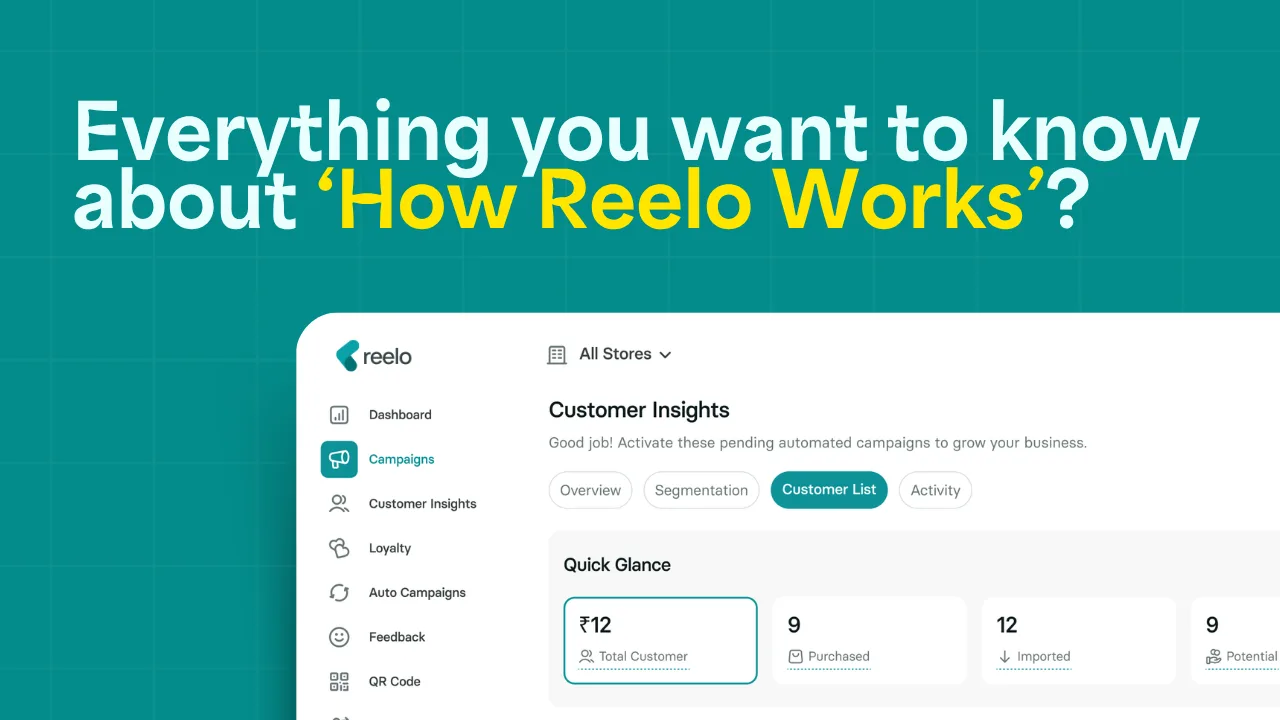
Reelo automatically re-evaluates customer segments based on real-time behaviour, so your active, at-risk, and lapsed groups always reflect who your customers actually are right now. Instead of marketing to outdated lists, you are always working with a current and accurate view of your customer base.