

Unified Customer View
Most restaurants know more about their customers than they realise. Their POS has transaction data. Their loyalty programme has visit frequency and points history. Their feedback tool has ratings and complaints. Their WhatsApp campaigns have open and click data.
The problem is that all of this lives in different places. And a customer who exists in five different tools as five different data points is not a customer you actually know.
What is a Unified Customer View?
A unified customer view is a single, consolidated profile for each guest that pulls together every interaction they have had with your restaurant, across every channel and touchpoint, into one place.
That means their order history, how often they visit, what they typically spend, which campaigns they responded to, what feedback they left, whether they are part of your loyalty programme, and what tier they are in, all visible in one profile rather than scattered across your POS, your feedback inbox, and your marketing tool.
The goal is simple. When you know everything about a customer in one place, every decision you make about how to communicate with them, what to offer them, and how to retain them becomes sharper and more effective.
Why Scattered Customer Data Is a Real Problem
When your customer data lives across multiple disconnected tools, gaps appear that cost you money in ways that are hard to see directly.
You send a win-back campaign to a customer who actually visited last week because your marketing tool has not synced with your POS. You offer a discount to your highest-spending guest who would have come back anyway, because you had no visibility into their loyalty history when you built the segment. You follow up with a complaint about cold food on a customer who has already been resolved and compensated through a different channel.
Each of these mistakes is small on its own. Collectively, they erode trust, waste budget, and make your marketing feel generic rather than personal.
What a Unified Customer View Actually Looks Like
In practice, a unified customer profile for a restaurant guest might include their name and contact details, the date and value of every order they have placed, their average spend per visit, their current loyalty points balance and tier, any feedback or ratings they have submitted, the last campaign they received and whether they opened or acted on it, and any notes flagged by staff such as dietary preferences or a past complaint.
With this information in one place, a restaurant manager or marketer can make genuinely informed decisions about how to engage that guest without having to piece together information from three different tools before sending a single message.
Understand it better with an Example
A mid-sized restaurant group in Mumbai operates four outlets and uses separate tools for POS, feedback collection, and WhatsApp marketing. Customer data is not connected across any of them.
When they run a loyalty campaign, they have no way of knowing whether a customer they are targeting has already redeemed a similar offer at another outlet. When a customer complains, the team handling the complaint has no visibility into whether that guest is a high-value regular or a first-time visitor, which means every complaint gets treated the same way, regardless of who it came from.
They consolidate their data into a single restaurant CRM platform. Within the first month, their campaign targeting improves significantly because they can now filter by actual behaviour rather than assumptions. Their complaint resolution team can see a guest’s full history before responding and prioritise accordingly. And their retention campaigns start feeling personal rather than broadcast.
How a Unified Customer View Changes Your Marketing
When every piece of customer data lives in one place, segmentation becomes genuinely powerful. You are no longer guessing who your best customers are or manually cross-referencing spreadsheets to build a campaign list.
You can identify your high-value regulars and treat them differently from occasional visitors. You can spot customers who are drifting away based on a drop in visit frequency before they are fully gone. You can personalise offers based on what a guest actually orders rather than what you assume they might want.
The unified customer view is not a feature in isolation. It is the foundation that makes everything else in your restaurant’s marketing and retention strategy work the way it is supposed to.
How Reelo Helps You Build a Unified Customer View
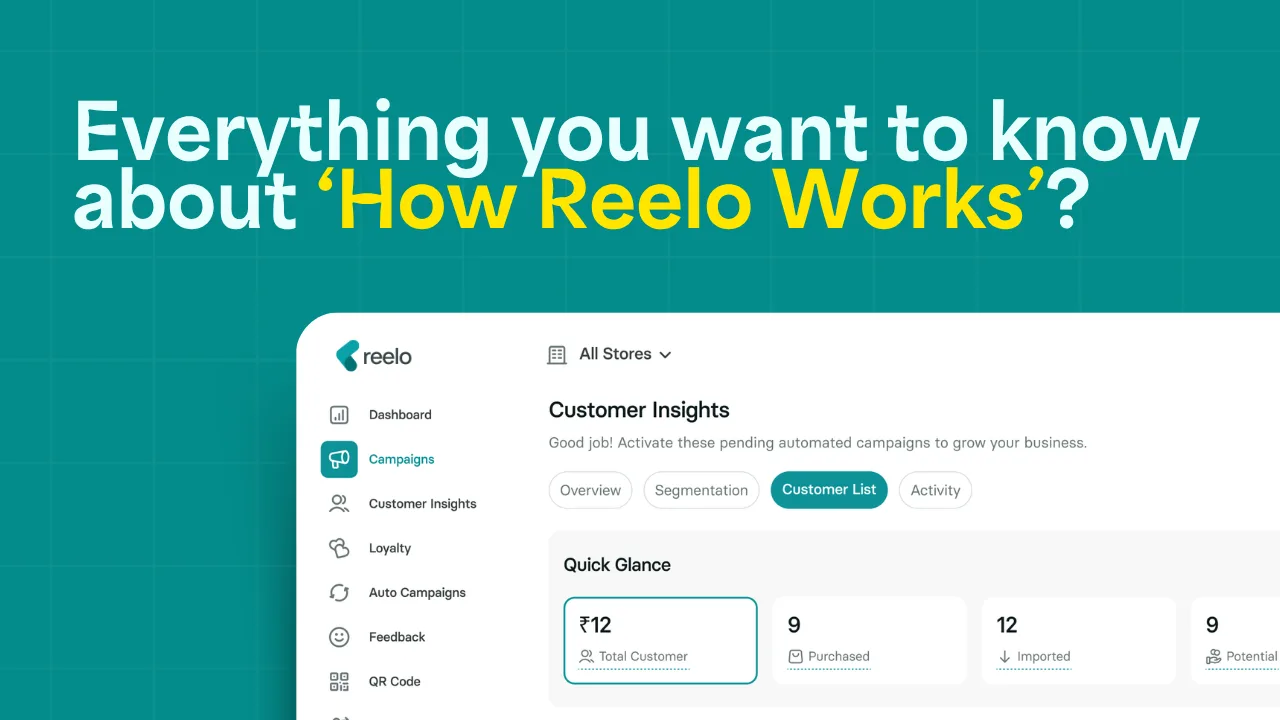
Reelo brings together your guest’s transaction data, loyalty activity, feedback, and campaign history into a single profile, so every time you reach out to a customer, you are doing it with the full picture in front of you, not just a fragment of it.