

Bottleneck
Ever been to a restaurant where everything was moving smoothly until suddenly your food took forever to arrive? Chances are, you experienced a bottleneck in action!
What is a bottleneck in restaurants?
Just like the narrow neck of a bottle that slows down the flow of liquid, a bottleneck in a restaurant is any point in your operation where things slow down or get congested, creating a backup that affects the entire service flow.
Think of your restaurant as a series of connected stations working together like a relay race. A bottleneck happens when one “runner” can’t keep pace with the rest of the team, causing everyone else to wait.
Common restaurant bottlenecks
Bottlenecks can pop up anywhere in your operation:
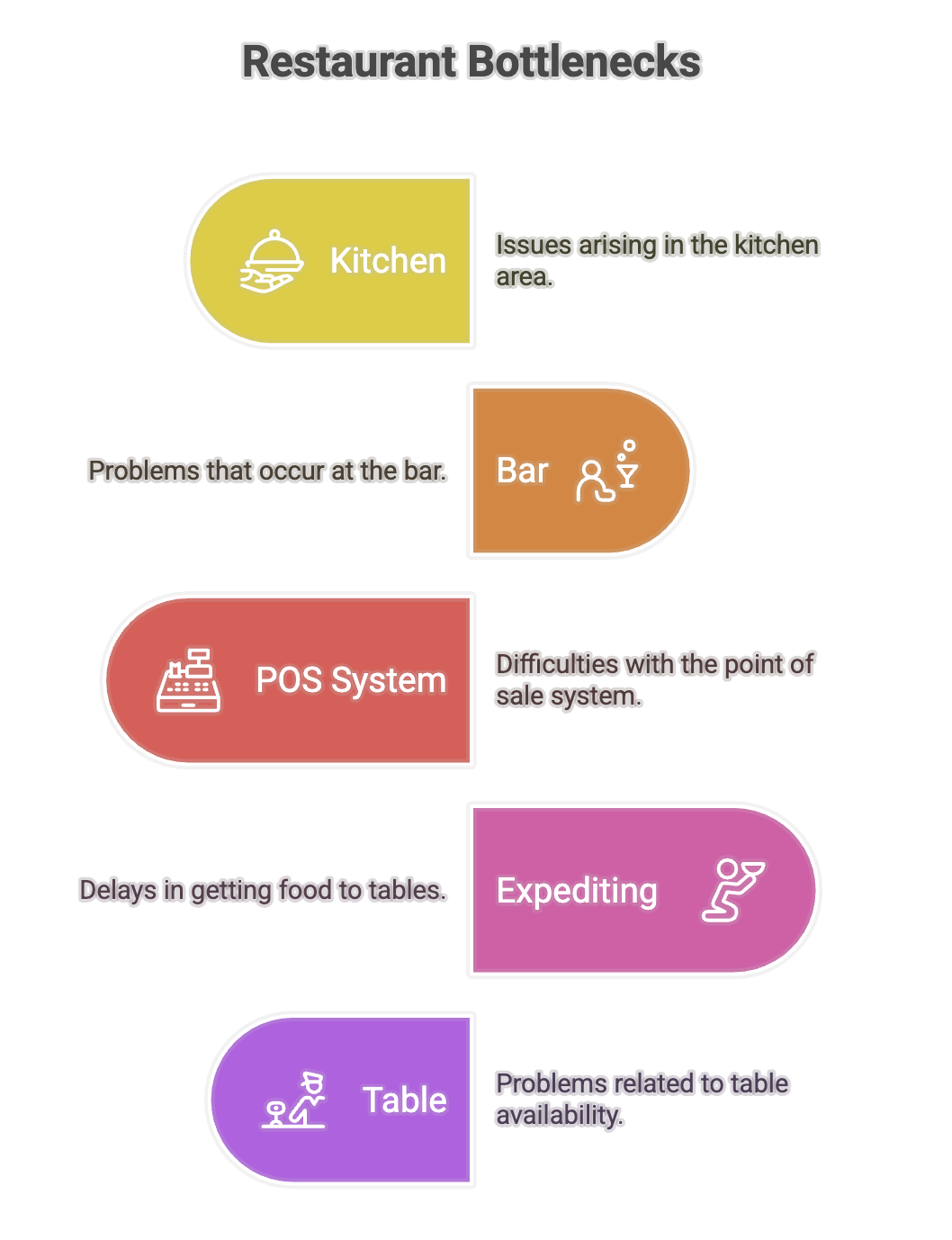
- Kitchen bottlenecks: Maybe your grill station can only handle 8 steaks at once, but you’re getting orders for 12
- Bar bottlenecks: Your bartender needs 3 minutes to make each specialty cocktail, but orders are coming in every minute
- POS system bottlenecks: Servers queue up to enter orders because you only have two terminals
- Expediting bottlenecks: Food is ready but getting stuck at the pass waiting for final checks
- Table bottlenecks: Large parties lingering when you need to turn tables for waiting guests
Real-world example
Imagine a popular brunch spot that offers made-to-order omelets. While guests love the customization, each omelet takes 4-5 minutes to prepare. If the restaurant gets 15 omelet orders within a 10-minute span, that single station becomes a major bottleneck, delaying not just those orders but potentially the entire kitchen flow.
Why identifying bottlenecks matters
Finding and fixing bottlenecks can dramatically improve your:
- Service speed
- Customer satisfaction
- Staff morale (less stress and chaos)
- Revenue (faster table turns = more customers served)
The best restaurant managers constantly watch for bottlenecks and develop solutions, whether that’s adding another cook during rush periods, simplifying complex menu items, or reorganizing workstations for better flow.
Remember: Your restaurant can only operate as fast as its slowest component. Find your bottlenecks, and you’ve found your biggest opportunities for improvement!