

Most restaurants lose margin through their own loyalty program without realising it.
This guide breaks down the hidden costs, the common mistakes, and how to turn your loyalty program into a genuine margin engine.
Quick answer: Loyalty programs fail when they reward the wrong customers, give away high-cost items, ignore software fees, and never measure what is actually working. The fix starts with clear rules, high-margin rewards, and regular tracking.
Why Restaurants Offer Loyalty Programs
Running a restaurant is expensive. Margins are tight. Getting new customers through the door costs real money: paid ads, social media, promotions.
A restaurant loyalty program is supposed to solve that.
Done right, it keeps customers coming back without needing to spend on acquisition every single time. It also helps you reduce dependence on third-party delivery platforms that take 15 to 30% commission on every order.
The core goals of a loyalty program:

- Drive repeat visits from customers who already know and like you
- Increase how much each customer spends per visit over time
- Build a direct relationship with no middleman and no platform fee
- Give you data on who your best customers are and what they order
Loyal customers spend more. They return more often. They are also far cheaper to keep than to find from scratch.
Think about it: a customer who visits 8 times a year is worth far more to you than one who comes in once after seeing a discount online and never comes back.
The Hidden Ways You Erode Margin
Most loyalty problems do not show up on day one. They creep in quietly. By the time you notice them, they have already cost you thousands.
1. Over-Discounting Instead of Smart Rewards
This is the biggest mistake. Restaurants give away full meals or big discounts on items that already have thin margins.
Examples of what goes wrong:
- “Buy 10 meals, get 1 free” — you have just given away a full plate that costs you 30 to 40% of its price to make
- “50% off Mondays” — this rewards people who were already going to come in anyway
- “Free starter on your birthday” on a high-cost dish — feels generous, hits your food cost hard
The fix: Reward with high-margin items. A free coffee costs you very little. A free dessert is manageable. A free main course can cost you 7x more. Redirect rewards to items where your margin stays intact.
2. Program Costs That Quietly Eat Into Profits
Running a loyalty program is not free. And the costs add up fast if you are not watching.
| Cost Type | Example | Why It Hurts |
| Software fees | Flat monthly or per-transaction charges | Ongoing fixed cost even if no one redeems |
| Setup and onboarding | Staff training, app setup, initial launch | One-time cost that is rarely factored in |
| Marketing the program | Social posts, in-store signage, emails | Adds up monthly and is often not tracked |
| Management time | Checking reports, fixing errors, adjusting offers | Hidden labour cost that eats hours weekly |
3. Rewarding the Wrong Customers (or the Wrong Way)
Not all customers are the same. But most loyalty programs treat them exactly that way.
The problem with one-size-fits-all:
- A customer who spends £8 on a lunch deal gets the same reward as one who spends £80 on a dinner for two
- Your best regulars, who would come back anyway, get the same deal as someone trying you for the first time
- One-off deal hunters collect rewards and disappear, costing you margin with zero long-term value
4. Low Redemption and Low Engagement = Wasted Spend
Over 65% of loyalty members never redeem a single reward. And more than 50% never return after their second visit.
What does this mean for you? You are paying for a program that most members never even use. The software costs money. The setup costs money. The marketing costs money. But the behaviour you wanted to change? It did not change at all.
This is the loyalty illusion: your program looks active on paper, but it is not moving the needle. It is just moving money out of your pocket.
5. Poor Integration and Operational Friction
When your loyalty platform does not connect properly to your POS or online ordering system, things break fast.
- Staff manually check stamps or points, slowing down service during a busy lunch rush
- Redemptions get applied incorrectly or duplicated, costing you money through errors
- Customers get frustrated when their reward does not work, and that hurts your brand more than having no program at all
Questions Restaurant Owners Ask (And Honest Answers)
Ques. Do loyalty programs actually make a difference or just burn margin?
Ans. Both. It depends entirely on how you design it.
Owners who see results tend to have tight reward rules, track everything, and adjust constantly. Owners who see losses tend to set it up once and forget it, while customers quietly drain rewards with no change in behaviour.
Programs that are too generous feel like a subsidy. Programs with too much friction feel pointless. The sweet spot is clear, fair, and easy, but tied to real commercial logic.
Ques. Are punch cards and paper stamps still worth it in 2026?
Ans. Paper cards are cheap to launch. But they come with hidden costs.
- Cards get lost and customers often ask for replacement stamps
- No way to track who your actual best customers are
- You still carry a liability: every unredeemed card represents a future cost
- No data means no way to improve the program over time
Digital alternatives add a monthly cost, but they give you real data, reduce fraud, and let you actually measure ROI. For most restaurants with more than 50 regular customers, the switch pays for itself quickly.
Ques. Why do some customers just ignore loyalty programs?
Ans. Three main reasons:
- The reward does not feel worth the effort. If it takes 15 visits to get a free drink, most people will not bother.
- Too much friction. Needing to download an app, create an account, and scan a QR code just to collect points loses people at every step.
- Loyalty fatigue. Customers already have 10 loyalty apps on their phones. If yours does not stand out immediately, it gets ignored.
Ques. How do I set thresholds so I am not giving away free food?
Ans. This one gets debated a lot among operators. A common pattern that works:
- Spend £100, get £2 off your next visit (2% back, protects margin)
- Spend £300, earn a free dessert or coffee (not a main course)
- Spend £600, earn a free starter (still protecting your food cost on mains)
The rule of thumb: make sure every reward you give is tied to incremental spending. If the customer would not have come back without the reward, it is earning its keep. If they would have come anyway, you have just handed money away for free.
Structural Mistakes in Loyalty Program Design
1. Over-Complicated Points Systems
If a customer cannot explain how your loyalty program works after hearing it once, it is too complicated.
Too many tiers. Confusing multipliers. Points that expire differently depending on how you earned them. These cause two problems.
- Customers give up and stop engaging, so you are paying for a system no one uses
- Staff make errors during redemption, slowing service and sometimes issuing rewards incorrectly
2. Over-Reliance on Discounts Instead of Behaviour-Driven Rewards
When your loyalty program is built around discounts, you accidentally train customers to wait for deals.
Imagine a regular customer who would normally pop in on a Tuesday starts waiting for your Monday deal instead. You have just shifted revenue, not grown it. And you have cut your margin on a visit that was already coming.
Reward behaviours instead.
Want more off-peak visits? Offer bonus points for Tuesday afternoons.
Want bigger orders? Give extra stamps for adding a dessert.
Tie rewards to what you actually want customers to do.
3. Ignoring Unit Economics and Menu-Margin Mix
Not everything on your menu has the same margin. A bottle of wine might have a 65% margin. A steak might have a 30% margin.
| Reward Item | Approx. Cost to You | Margin Verdict |
| Free coffee | Very low | Smart reward |
| Free dessert | Low to moderate | Acceptable |
| Free starter | Moderate | Use with care |
| Free main course | High | Risky, protect margin |
| % discount on whole bill | Varies widely | Avoid unpredictable costs |
4. Not Segmenting Customers or Occasions
The couple celebrating an anniversary and the office worker grabbing lunch are not the same customer. They should not get the same reward.
Segmenting does not mean building a complex system. It means having at least two tracks: one for regular everyday customers and one for high-value diners.
Off-peak visits are also an opportunity. Your marginal cost of an extra cover on a quiet Tuesday is much lower than on a packed Friday. Reward off-peak visits more generously. It costs you less and fills tables you would otherwise lose.
When Loyalty Becomes a Cost Centre
Programs That Do Not Change Buying Behaviour
Ask yourself this: would your regulars stop coming in if you removed the loyalty program tomorrow?
If the answer is no, they would still come anyway, then your program is not changing behaviour. It is just subsidising visits that were already happening.
Every reward you give to a customer who would have visited regardless is pure cost with zero return. That is the real margin killer: not one dramatic mistake, but hundreds of small, unnecessary giveaways.
The Wasted Marketing Spend Trap
Restaurants lose significant revenue every year to loyalty programs that are simply forgotten or too annoying to use.
Paper punch cards designed for a one-off promotion. Digital programs launched with fanfare, then ignored for 8 months. Email campaigns promoting rewards nobody is checking.
If you cannot tell me today what your loyalty program’s redemption rate is, what it costs per month, and whether it is driving incremental visits, it is costing you money you cannot measure.

Inflation and Fixed Point Values
Here is a quiet margin killer that almost nobody talks about.
You set up your program a few years ago: 100 points equals one free main course. Food costs were manageable then. Fast forward to today, and food costs are up 25 to 40%, but your points value is unchanged. The reward that used to cost you £5 now costs you £7.
Your loyalty program is effectively widening your margin gap every year it is left unchanged. Review point values at least once a year, ideally every quarter.
How to Design a Margin-Positive Loyalty Program
The good news: every mistake above has a clear fix. Here is how to build a program that actually works for your bottom line.
Start With a Clear Margin-Protection Rulebook
Before you design anything, write down your rules:
- Which items can be used as rewards? (Only high-margin ones)
- What is the minimum spend before any reward is earned?
- How often will you review and reprice the program?
- What is the maximum you are willing to give away per month?
Choose the Right Tech and Pricing Model
The best loyalty platform is the one that fits your size and integrates with your existing systems.
| Option | Best For | Watch Out For |
| Paper stamp cards | Very small independents, low volume | No tracking, fraud risk, no data |
| Flat monthly SaaS | Growing restaurants with steady volume | Monthly fees add up, check ROI quarterly |
| Per-transaction pricing | Seasonal or variable-volume restaurants | Can get expensive during busy periods |
| POS-integrated loyalty | Any restaurant wanting clean data | Higher setup cost, but saves time and errors |
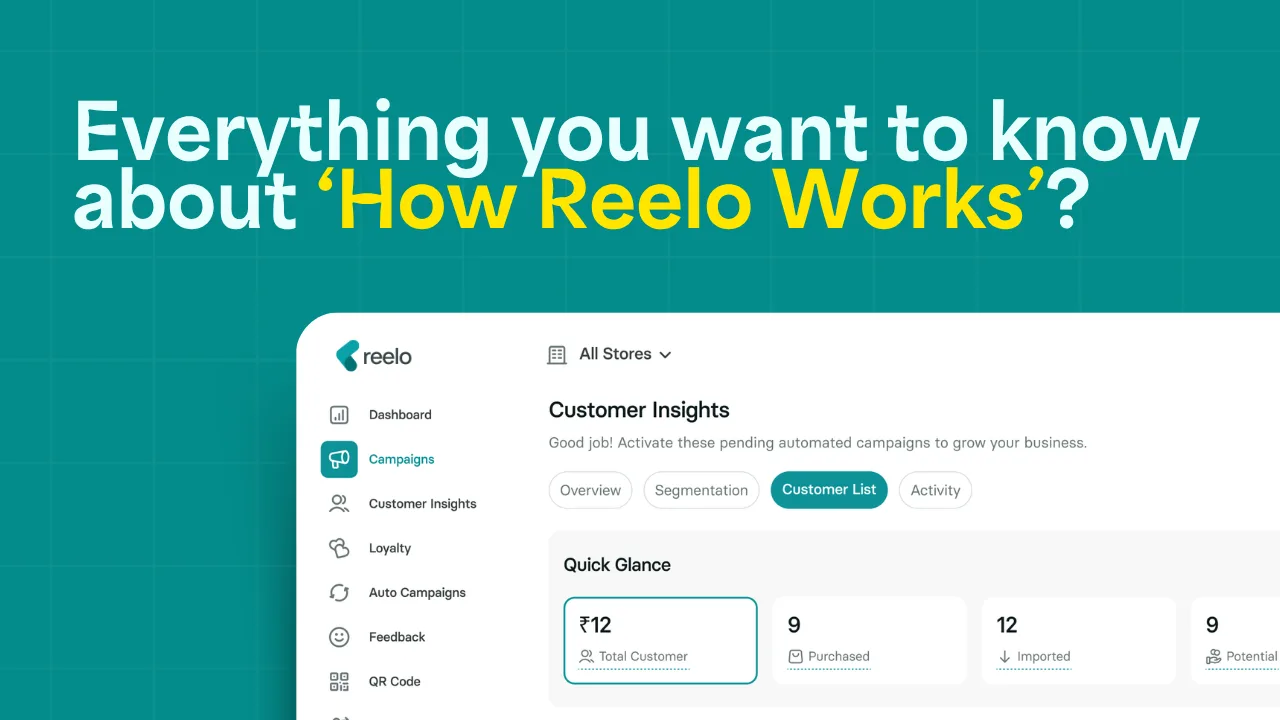
This is where Reelo makes a real difference. Reelo integrates directly with your POS, so points are awarded and redeemed automatically at checkout. Your team does not need to learn a new system; it works alongside what you already have. Over 32,000 restaurants use it to track loyalty, send targeted offers, and measure results from one dashboard.
Keep Rewards Simple, Relevant, and Behaviour-Driven
Simple works. Here is what that looks like in practice:
- Stamp-based: visit 5 times, get a free coffee, easy to understand, low cost to deliver
- Behaviour-tied: double stamps for orders placed directly (not via a third-party platform)
- Off-peak bonus: extra points for visits on Monday to Wednesday before 6pm
- Upsell reward: earn a bonus stamp when you add a side or dessert to your order
Reelo lets you set up all of these automatically. You choose the reward structure, points-based, visit-based, or spend-based, and the platform runs it without manual intervention. You can also set minimum spend thresholds and daily redemption limits, so you never give away more than your margin allows.
Segment and Personalise
You do not need to build 10 customer segments. Start with two.
- Everyday regulars: lunch customers, grab-and-go, frequent low-spenders. Reward for visit frequency.
- High-value diners: evening guests, celebrations, higher spenders. Reward with experiences — a free starter, a birthday dessert, priority booking.
Reelo makes this practical. It segments your customer base automatically based on visit history, spend, and behaviour. You can then send personalised WhatsApp, SMS, or email campaigns to each group in minutes. Bercos used Reelo’s targeted WhatsApp campaigns for a food festival and achieved a 204x ROI. BLR Brewing Co. used smart segmentation and hit a 218x ROI with the same approach.
Measure and Kill Underperforming Mechanics
Every 3 months, ask these questions:
- What is our current redemption rate? (Below 20% is a warning sign)
- Which rewards are being redeemed most, and what do they cost us?
- Are loyalty members spending more per visit than non-members?
- Is our platform cost justified by the incremental revenue it drives?
- Have food costs changed since we last set our point values?
Reelo gives you real-time reports on all of this. You can track lifetime value, redemption behaviour, repeat rates, and campaign attribution, so you are proving ROI with real data, not assumptions. If an offer is not working, you can see it immediately and change course.
Read more about: Effective Tips to Build a Successful Restaurant Loyalty Program
Checklist to Protect Margin in Your Loyalty Program
Use this to audit your current program, or to build a new one that protects your margin from day one.

Audit your current program:
- What percentage of your total sales are going to reward costs?
- Can you name your top 20 loyalty customers and how much they spend?
- Do you know your current redemption rate?
Fix your rewards:
- Shift all rewards to high-margin items only (coffee, desserts, add-ons)
- Set a minimum spend threshold before any reward can be earned
- Raise the bar on free main-course-style rewards to protect food cost
Simplify your program:
- Remove confusing tiers and replace with one or two clear tracks
- Make sure any member of staff can explain the program in 30 seconds
- Test the redemption flow yourself and fix anything that takes more than 3 steps
Connect your systems:
- Integrate loyalty with your POS so there is no manual work for staff
- Connect to your online ordering system for automatic reward tracking
Review regularly:
- Schedule a quarterly review covering redemption rate, margin impact, and incremental revenue
- Reprice point values whenever food costs increase by more than 10%
- Discontinue any offer that is not driving new behaviour after two review cycles
The Bottom Line
Loyalty programs do not fail because the idea is wrong. They fail because the design is lazy.
The restaurants winning with loyalty are not giving more away. They are giving smarter. They know their margins. They reward the right things. They track what works and cut what does not.
You built your restaurant on tight margins and hard work. Your loyalty program should respect that, not quietly undermine it.
If you want a loyalty program that is built for exactly this kind of thinking, Reelo is worth a look. It is designed specifically for restaurants, integrates with your existing POS, and gives you the data to run loyalty like a business decision.