Back
Back










 BACK TO BLOG HOME

Walking into Bharat Mandapam for AAHAR 2026, I had my ideas about what I’d see. What I found instead was a busy, loud world that shows the true heart of India’s hospitality and food industry – bigger, bolder, and more alive than ever.
Delhi’s iconic Bharat Mandapam stretched out like a small city. Pictures can’t do justice to how large it really is, huge exhibition spaces connected by paths filled with industry folks, food lovers, and curious minds. And this year, for the 40th edition of AAHAR, it felt like the show had finally grown into a version of itself it had always been meant to become.
5 Days That Define India’s Hospitality Landscape
AAHAR 2026, held from March 10 to March 14, transformed Bharat Mandapam into the epicentre of India’s food and hospitality industry for five action-packed days. Each day brought new connections, innovations, and opportunities for everyone involved.
This year, AAHAR was jointly organized by the Ministry of Food Processing Industries (MoFPI) and the India Trade Promotion Organisation (ITPO), a partnership that elevated the event’s stature even further. As premier trade promotion agencies of the Government of India, their combined commitment has made AAHAR not just a domestic industry showcase but a truly global networking platform that opens doors for Indian businesses to explore international markets.
Their influence was evident in the international representation at the event, with delegations from across the world participating. The 40th edition wasn’t just a milestone in numbers; it was a statement about where India’s food and hospitality industry is headed.
The Real Start: March 9th
Here’s something the official dates don’t tell you. AAHAR 2026 technically begins on March 9th for exhibitors. That’s the day you show up to collect your passes, and trust me, it’s a full day’s work in itself.
This year, the pass process was more involved than before. Last year, exhibitor passes came pre-laminated and ready to go. This time, everything arrived separately. You first collect the cards, then paste the photo, and then get the name printed on it. Handwritten names didn’t work this time. If you booked your stall online, the pass came with the name already imprinted. But if you booked through an association, you had to get the names printed, add the photo, and then get the whole thing laminated. These passes are non-negotiable security will not let you in without them. Don’t find this out the hard way.
You also need your possession letter (printed, not digital; ITPO is strict about this), visitor passes, and service passes all sorted before the show opens. Do all of this on March 9th. You’ll thank yourself a hundred times over on March 10th.
The Welcome Surprise: Gate 4 and the Art of Arrival
There are six gates at Bharat Mandapam. Gate 4 is the main entrance, and calling it “overcrowded” would be an understatement. Overcrowded is actually too gentle a word. On opening day, it was the hospitality world’s version of Mahakumbh. People packed together, everyone holding phones with their pass details, moving forward inch by inch.
“Is it always this busy?” I asked someone next to me, who smiled knowingly.
“First time here?” he replied. “AAHAR isn’t just a show; it’s like a holy trip for us in this business.”
A word of advice: download the hall map from the official AAHAR website before you arrive, and study it. There are Hall-wise Product Profiles available that will help you figure out exactly which halls you need to hit. Without a plan, you will wander, and with the sheer scale of this venue, wandering is expensive in terms of both time and stamina. Comfortable shoes are not optional. They are survival gear.
Inside the Halls: A World of Specialties
Inside, each hall transformed into its own universe with clear purposes and identities. And this year, the booths themselves were something else entirely.
The Booth Revolution
What stood out immediately in 2026 was how interactive everything had become. Exhibitors weren’t just displaying products behind counters, they were inviting you in. Booths had touchscreens, live demos, tasting counters, and experiences designed to pull you off the walkway and into the story of their brand. Walking through the halls felt less like a trade show and more like an industry theme park.
Hall 5: The Flavor Universe
Hall 5 was all about food products. The air was filled with smells – spices from Kerala, chocolates from Belgium, namkeen from Gujarat – making an invisible mix of scents that changed as you walked through it.
A cheese maker from Himachal Pradesh had people lining up to taste his award-winning product. “We use traditional methods with a modern twist,” he explained, offering samples on small crackers. “What you’re tasting is the flavour of our local mountain grass that the cows feed on.”
Between the Halls: The Food Truck Surprise
One of the most exciting additions to AAHAR 2026 was what happened between the halls. Food trucks had set up camp in the open spaces, and many food brands that hadn’t taken traditional booths this year had opted for food trucks instead — a smart, intimate way to let their product do the talking. It made the outdoor areas feel alive in a completely new way, and honestly, some of the best conversations happened while waiting in line at one of those trucks.
Hall 6, Stall 40: Reelo’s Big Move
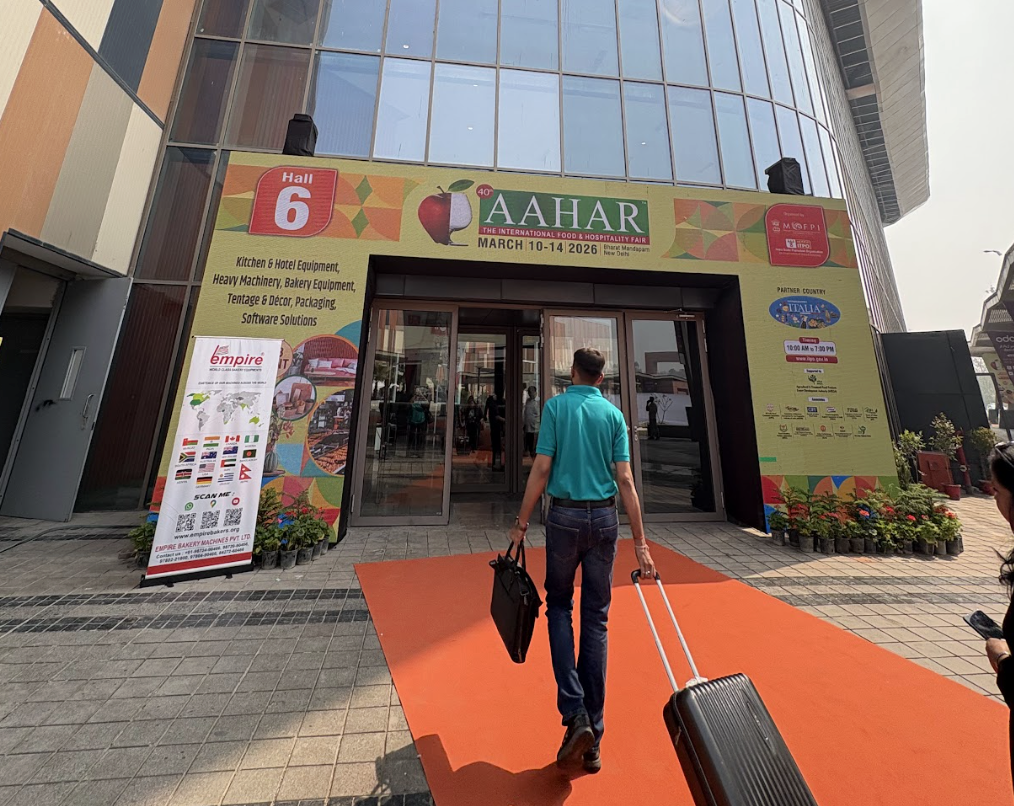
And then there was Reelo, this time, one single, huge booth at Hall 6, Stall 40. Last year, Reelo had two separate booths across two halls. This year, the decision was made to consolidate into one large, impactful space, and it paid off.
The positioning said it all: “Put the RE back in REvenUE.” Where last year’s tagline was about growing revenue without discounting, this year Reelo leaned into something sharper — a reminder that loyalty and revenue aren’t separate conversations.
The booth featured an interactive screen where visitors could actually create their own memberships in real time. People loved it. You could see the moment it clicked: restaurant owners sitting down, playing with the interface, building out a loyalty programme with their own hands. That experience of doing, not just watching, made all the difference.
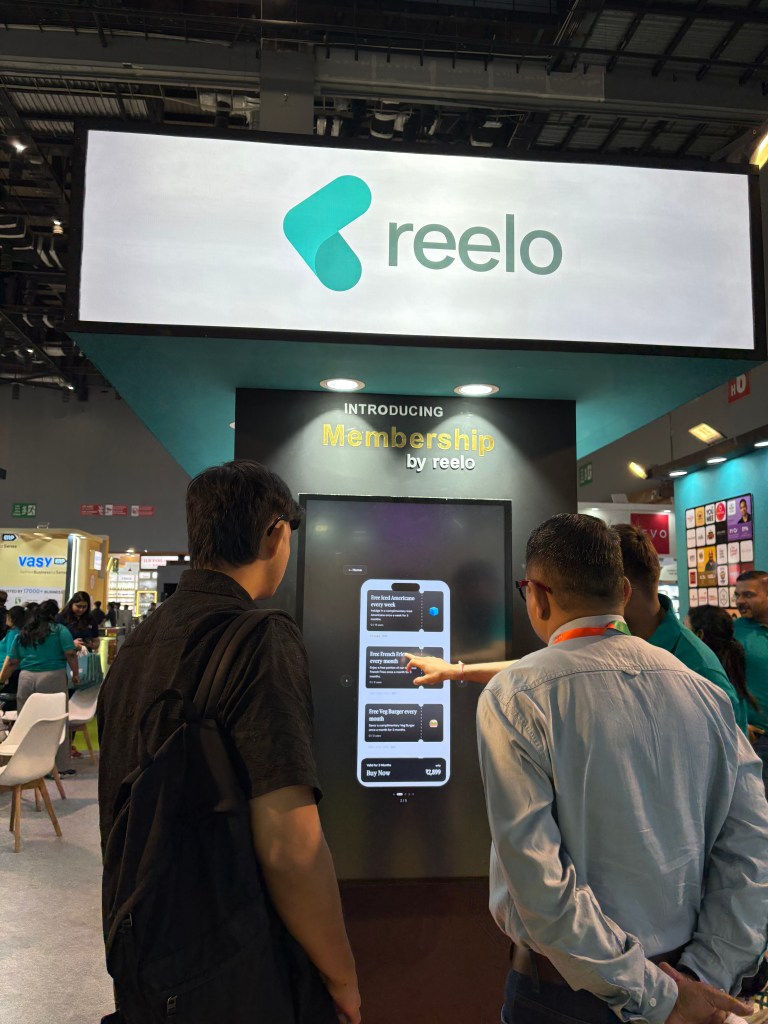
The Reelo team had great conversations with restaurant owners who visited the booth throughout the week. Light bulb moments happened constantly as owners understood how they could grow their business without cutting into margins with constant discounts.
“We’ve tried everything to keep customers coming back,” one café owner told the team. “But discounts are killing our margins. This makes sense for both sides.”
For the Reelo team, AAHAR also offered something beyond customer conversations. Team members from across India who usually only connect on calls or screens got to work side by side, share meals, and build real bonds. You could see the energy as they took turns handling the rush of visitors, supported each other during demos, and celebrated small wins throughout each day.
During lunch breaks, team members from different cities exchanged insights about local customer preferences and regional challenges, the kind of casual conversations that formal meetings never quite manage to spark.

“This is worth more than ten team-building events, seeing everyone work together with the same passion, helping each other out — it builds connections that last all year.” — Parin Sanghvi, Co-Founder, Reelo
The AAHAR Survival Guide: Do’s and Don’ts
For first-time attendees, AAHAR can be overwhelming without proper preparation. Here’s what I wish someone had told me before my first visit:
Before You Arrive
- Collect passes on March 9th: Save yourself hours of stress by collecting your exhibitor passes, visitor passes, service passes, and possession letters the day before the event opens. The queues on opening day are something else.
- Understand the pass process: If you’ve booked through an association (not directly online), budget extra time to get names printed, photos pasted, and everything laminated on-site. Have this sorted before March 10th.
- Bring printed possession letters: Digital copies won’t cut it. Security strictly enforces this.
- Plan your route using the official website: Download the Hall-wise Product Profiles from the AAHAR website and mark the booths you absolutely must visit. Six gates, multiple halls — without a plan, you’ll spend more time navigating than networking.
- Prepare business cards in abundance: I saw people run out by day two. Whatever number you think you need, double it.
During the Event
- Wear comfortable shoes: This cannot be emphasized enough. You will walk kilometres each day on hard concrete floors.
- Stay hydrated: Delhi’s March weather can be deceptively warm, and the crowded halls amplify the heat. Carry a water bottle.
- Carry exhibition exit passes: For exhibitors, removing any item from your booth requires an exit pass. Have these ready and filled out in advance.
- Schedule appointments beforehand: The most successful exhibitors pre-arranged meetings rather than relying solely on walk-ins.
- Explore between the halls: Don’t skip the outdoor spaces — the food trucks are worth the detour, and the fresh air is a welcome reset from the sensory overload inside.
Marketing Magic: Beyond Traditional Displays
Human Mascots: Walking Attractions
One of the most eye-catching marketing strategies came from food brands using human mascots. A giant walking samosa handed out business cards while posing for selfies. Children and adults alike couldn’t resist approaching the six-foot pastry, creating natural crowds around the booth. A tea company went further still, with staff dressed as tea leaves dancing through the aisles — a moving advertisement that drew eyes wherever they went.
The Interactive Booth Effect
Smart exhibitors in 2026 knew that the real draw wasn’t a banner or a brochure it was an experience. Brands that built interactive elements into their booths consistently had longer visitor engagement and more meaningful conversations. People weren’t just stopping and moving on; they were staying, touching, trying, and talking.
Sensory Experiences: Still as Effective as Ever
The popcorn machines were back at the Reelo booth, sending irresistible aromas drifting through Hall 6 and drawing visitors from across the aisle. Simple, effective, and wonderfully human — once people were there with popcorn in hand, they stayed to learn more.
The Unexpected Community: Competitors Become Colleagues
By March 12, the show had changed completely. The early stiffness was gone, replaced by a community feeling. Competitors shared tables, talked about problems, and even sent people to each other’s booths.
The neighbours in our booth’s corner became friends over the week. We’d swap stories between visitor rushes, share observations about what was resonating with attendees, and offer each other the kind of small, real help that happens when people are in the same trench together. On the last day, the glass manufacturer in the neighbouring stall gifted us a set of glasses. Just like that, out of generosity and the easy warmth that AAHAR somehow always manages to generate by the end.
“We’re facing the same challenges,” explained a restaurant software provider seated next to his direct competitor. “Supply chain issues, changing consumer demands, and staff retention, we can learn from each other while still competing in the marketplace.”
The Sensory Overload: A Beautiful Chaos
What the brochures didn’t tell me about was how much there was to take in. The steady sound of conversations in many languages, announcements over speakers, the sounds from cooking demos, and the beeping of scanners at booths, it was a lot, but somehow gave you energy.
A first-time visitor standing next to me looked overwhelmed. “I didn’t expect it to be so… intense,” she said, studying her map. I showed her how to navigate the halls more efficiently, a small act of community that seemed to be happening everywhere I looked.
In the drinks section, I heard a lively debate about the future of craft gin in India between a hotel buyer and a small distiller. Their conversation drew a small crowd, turning into an unplanned industry talk.
“The Indian palate is changing,” insisted the distiller. “We’re using local botanicals that tell the story of our regions. This isn’t just gin; it’s liquid geography.”
The food court, funnily enough, the most crowded part of a food show, became the place to meet people. Business cards handed over during meals, partnerships formed while waiting for coffee, new ideas written on napkins.
Wisdom from Veterans: The Soul of AAHAR 2026
As the day ended, I stopped at a small booth selling old-style cookware. The older owner, seeing how tired I was, offered me a chair and tea.
“Second time here?” he asked, reading me somehow.
“Is it that obvious?”
“You have that look you know what to expect, but it still got you,” he smiled. “I’ve been coming here for twenty years. It does that every time.”
“Last year I thought I’d be more prepared,” I admitted.
He laughed. “Everyone thinks that. AAHAR doesn’t get easier, it gets richer. You start noticing different things. The first time, you’re just trying to survive it. The second time, you start actually feeling it.”
He shared stories of how AAHAR had grown from a small industry gathering to the massive event it is today. “When we started, we fit in two halls. Now look at it forty editions, a new venue, and still growing. This is the story of India’s food culture.”
“So you keep coming back because…?”
“Because where else can you feel the heartbeat of our whole industry in one place? This busy mess, it’s our community. And every year, it gets a little bigger.”
AAHAR is getting bigger every year. The 40th edition proved that beyond any doubt.
Conclusion: The Reality Exceeds Expectations
As I left Bharat Mandapam, feet aching and voice roughened from a week of conversations, I understood what he meant. AAHAR wasn’t just a show; it was a living thing made up of thousands of passionate people.
The reality of AAHAR 2026 broke my expectations, not by disappointing me, but by showing me something much more valuable than a well-organized trade show. It showed me the human side of an industry usually hidden behind hotel lobbies and restaurant kitchens.
Those long queues on March 9th? Not a failure, a sign of how much this event matters. The crowded halls weren’t bad planning; they were proof of a growing, thriving industry.
People came with curious minds and left with amazed ones. They came seeking products and left with partnerships. They came as individuals and left as part of a community.
AAHAR 2026 wasn’t perfect, it was real. And in that realness was its true value. It wasn’t just an exhibition of products and services; it was a celebration of the human passion that drives India’s hospitality industry forward.
Always bring comfortable shoes. You’re going to need them.