Back
Back










Zoning Regulations
Zoning regulations are like your city’s master playbook — the rulebook that dictates where your restaurant can legally exist and what you can do there. If you’re picking a location without checking zoning first, you’re basically gambling with your entire business plan.
The Purpose of Zoning
Think of zoning as urban planning with boundaries. Cities and towns divide land into zones — residential, commercial, industrial, and mixed-use — each with specific permitted uses. Restaurants typically need commercial or mixed-use zoning, though small cafés or home-based food ventures can sometimes sneak into residential zones with special permissions.
Zoning Restrictions That Affect Restaurants
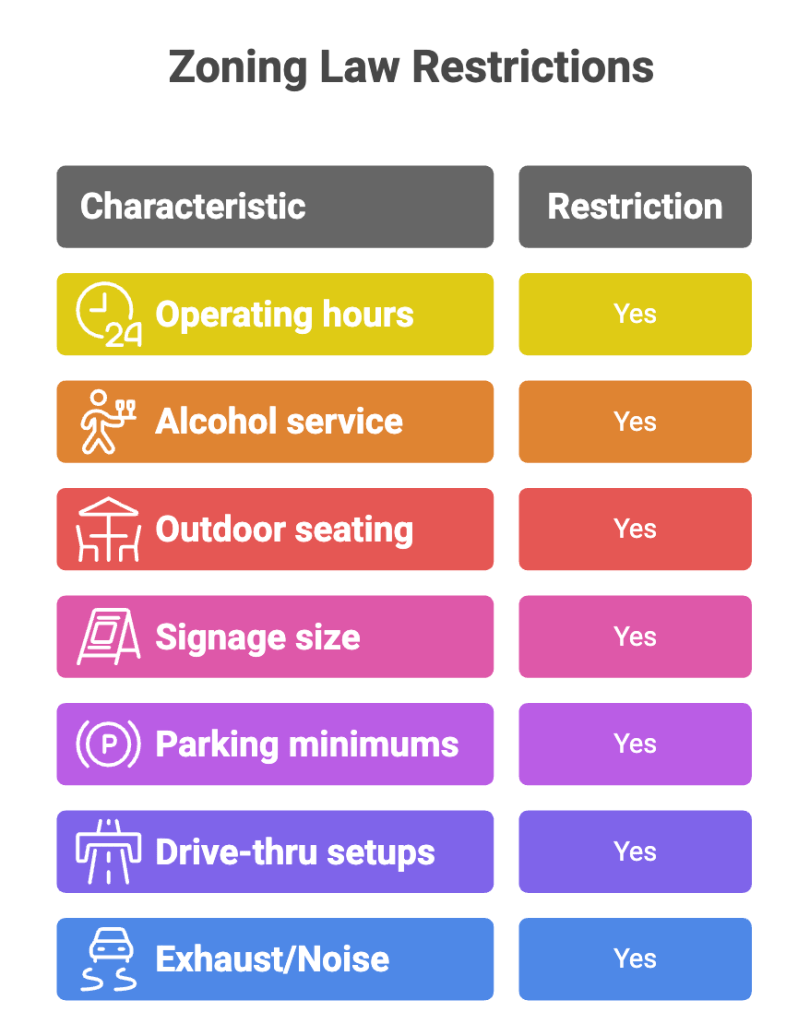
But don’t assume a space marked “commercial” is automatically restaurant-ready. Zoning laws get granular. They can restrict:
-
Operating hours
-
Alcohol service
-
Outdoor seating
-
Signage size
-
Parking space minimums
-
Drive-thru setups
-
Kitchen exhaust or noise levels
What to Check Before You Commit
Before you sign any lease or finalize a location, do your zoning homework. Smart operators:
-
Check current zoning classifications
-
Investigate if special permits or conditional use approvals are needed
-
Review any pending zoning changes in the area
-
Ask: Is my concept allowed here — as is?
Why Zoning Compliance Matters
Zoning compliance isn’t a one-time concern. It affects everything from your liquor license and customer capacity to delivery traffic and renovation plans. One overlooked regulation can lead to fines, delays, or even forced closure.
Work with Experts
In bigger cities, zoning maps can be a maze. That’s why many successful restaurateurs team up with zoning consultants or experienced commercial brokers to avoid expensive mistakes. After all, the “perfect” location means nothing if local laws won’t let you operate as planned.
For Restaurant Growth
Bottom line: understanding zoning is more than just red tape — it’s strategic groundwork. When done right, it keeps your restaurant legally secure, operationally flexible, and future-proofed for growth.