Back
Back










Table Turnover
Table turnover might not be the flashiest restaurant metric, but it’s one of the most powerful levers for profitability.
In simple terms, table turnover measures how many times a table is occupied by different customers during a single service window — breakfast, lunch, or dinner. But beyond the math, it’s the rhythm of your restaurant. And if you can optimize it without rushing your guests, you’re turning every seat into a revenue generator.
What Does Table Turnover Actually Mean?
Let’s say you have a 4-seater table.
-
One group uses it for breakfast
-
Another comes for lunch
-
A third dines during dinner
That’s 3 table turns in one day. Now imagine during a busy Sunday lunch, you manage to serve two parties in just two hours at that same table — you’ve just doubled its revenue potential without expanding your restaurant footprint.
Why Table Turnover Matters More Than You Think
Higher table turnover = more guests = more revenue.
And the best part? You don’t need more space or marketing spend — just smarter seat management.
But here’s the catch: it’s not about shuffling guests out the door like a factory line. It’s about creating a dining experience that’s smooth, efficient, and respectful of your customers’ time.
Restaurants that master this balance get the best of both worlds:
✅ Happy, returning customers
✅ Increased revenue per service period
What Affects Your Turnover Rate?
Not every restaurant is built for high-speed dining, and that’s okay. Your turnover goals should align with your concept.
Here’s what impacts your turnover:
-
Service Style: Fine dining = longer meals, casual = faster churn
-
Menu Complexity: Simpler menus often mean quicker prep + quicker dining
-
Staff Efficiency: Trained servers = smoother operations
-
Table Size & Layout: Smaller tables usually turn faster than big ones
-
Meal Period: Lunch often sees faster turns than dinner
Typical benchmarks look like this:
-
Fast casual: 4–6 turns during peak hours
-
Full-service casual: 2–3 turns
-
Fine dining: 1–2 turns max
How Smart Restaurants Optimize Table Turnover
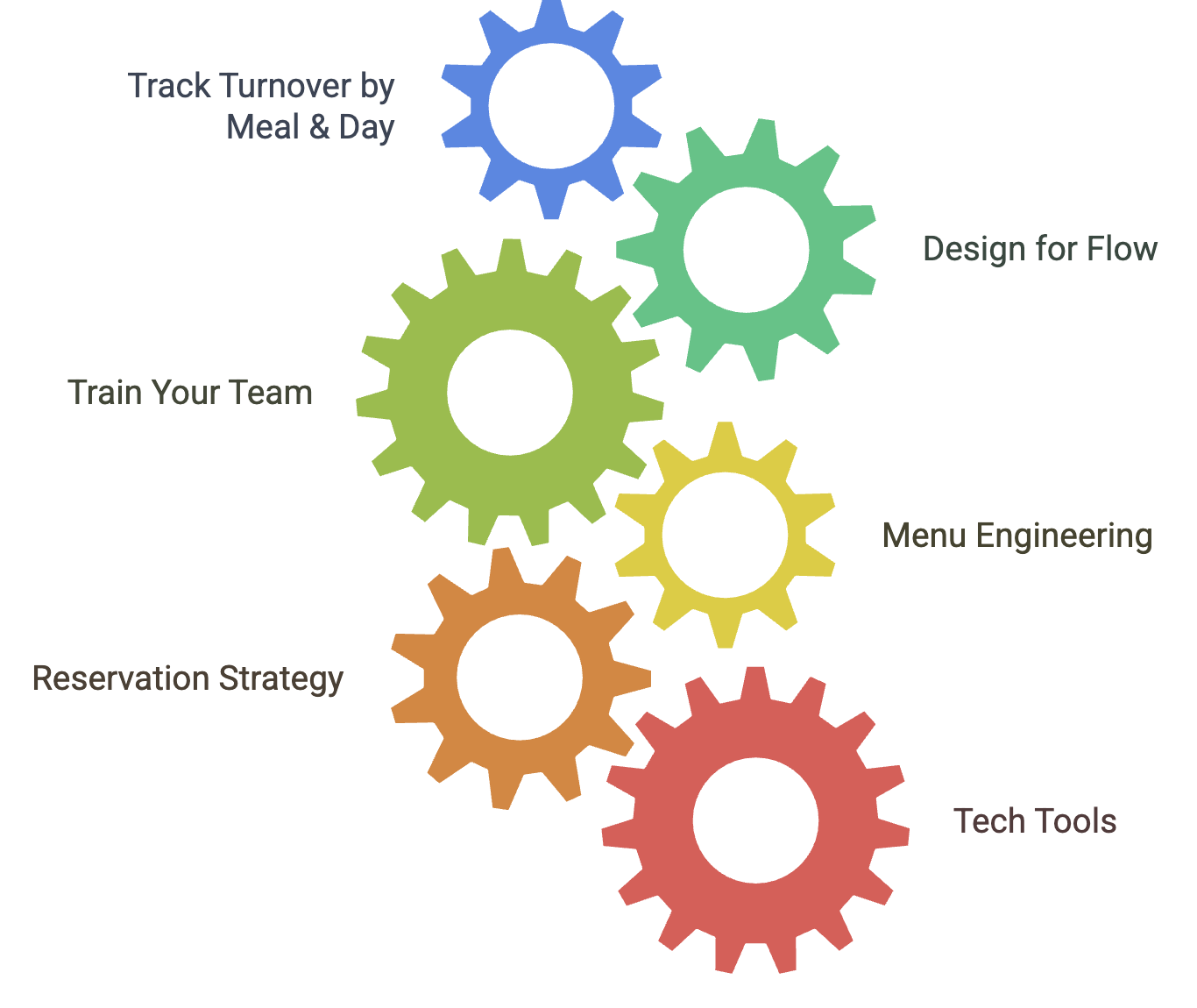
-
Track It by Meal & Day: Know your averages — Monday lunch may turn slower than Friday dinner. Use this to plan staffing and prep.
-
Design for Flow: Tables that are easy to access, clear, and reset make a huge difference in reducing downtime between guests.
-
Train Your Team: Teach staff how to read cues, serve efficiently, and reset tables quickly — without ever making diners feel rushed.
-
Menu Engineering: Highlight fast-prep dishes during peak times or use limited-time offers to speed up decision-making.
-
Reservation Strategy: Use timed slots during high-demand periods and keep a balance of bookable vs. walk-in tables.
-
Tech Tools: Use POS data to track average dining time per table. Some systems alert staff if a table has been idle too long or if the next party is ready to be seated.
Speed ≠ Rush: The Real Secret
Here’s the golden rule of table turnover: Speed without sacrifice.
If you’re chasing high turnover at the cost of service, you might be winning today but losing customer loyalty tomorrow.
Instead, aim for operational excellence — where dishes arrive promptly, staff communicate clearly, and the experience feels effortless. A table that turns slightly slower but generates a rave review is often worth more than two that feel rushed and leave a bad taste (pun intended).
Final Thought
Table turnover isn’t just about numbers. It’s about understanding your rhythm, managing your flow, and maximizing revenue while elevating experience.
Because in restaurants, every seat has a story — and the more stories you host per service, the healthier your bottom line becomes.