Back
Back










On-the-Job Training
On-the-job training is where real learning happens in the restaurant world. It’s not about boring slide decks or hours in a training room—it’s about hands-on experience, live feedback, and mastering the art of hospitality right where it matters most: the kitchen, the floor, and the customer’s table.
What Is On-the-Job Training in Restaurants?
On-the-job training means teaching your staff while they work. They learn by doing, with guidance from seasoned team members who’ve mastered the flow of a busy restaurant. This approach is not only practical—it’s essential in an industry where speed, multitasking, and customer service are real-time skills.
Think of it as live coaching meets real service hours.
Why Restaurants Rely on On-the-Job Training
1. Fast, Practical Learning
New servers don’t need lectures to understand table turnover—they need to shadow someone during a packed Saturday night. Cooks won’t learn plating speed in theory—they learn when the kitchen is firing 15 orders at once.
2. Cost-Effective and Efficient
There’s no downtime. Staff contribute to operations while learning. Senior employees act as mentors, so there’s no need for a separate trainer.
Examples of On-the-Job Training in Action
-
Servers: Start by observing, then support with water runs, order entry, and eventually take on their own tables.
-
Kitchen Staff: Begin with prep work, learn safety protocols, and move up to line cook responsibilities under supervision.
-
Cashiers/Hosts: Learn customer greeting, POS operations, and how to handle peak-time stress—all while working the front desk.
Buddy System = Training Gold
Pairing new hires with experienced team members creates a supportive mentorship. The mentor offers real-time feedback, answers questions, and ensures the new employee feels guided—not thrown into chaos.
It builds confidence, loyalty, and consistency.
Progressive Learning Builds Confidence
Instead of overwhelming new employees, smart restaurants use a step-by-step system:
-
Start small (bussing or prep work)
-
Build skills (order taking or grill work)
-
Grow responsibility (managing sections or overseeing stations)
This structured progression helps reduce mistakes and sets clear growth paths.
Common Pitfalls to Avoid
On-the-job training can go wrong without structure. Here’s how to avoid the most common issues:
-
Inconsistent methods: Not every mentor teaches the same way. Use checklists and written SOPs to maintain consistency.
-
Training during peak rush: When things get busy, training can take a backseat. Avoid starting new hires during your busiest hours.
-
Poor mentors: Make sure your trainers want to teach and set a great example. Bad habits pass on quickly.
How to Make On-the-Job Training Work
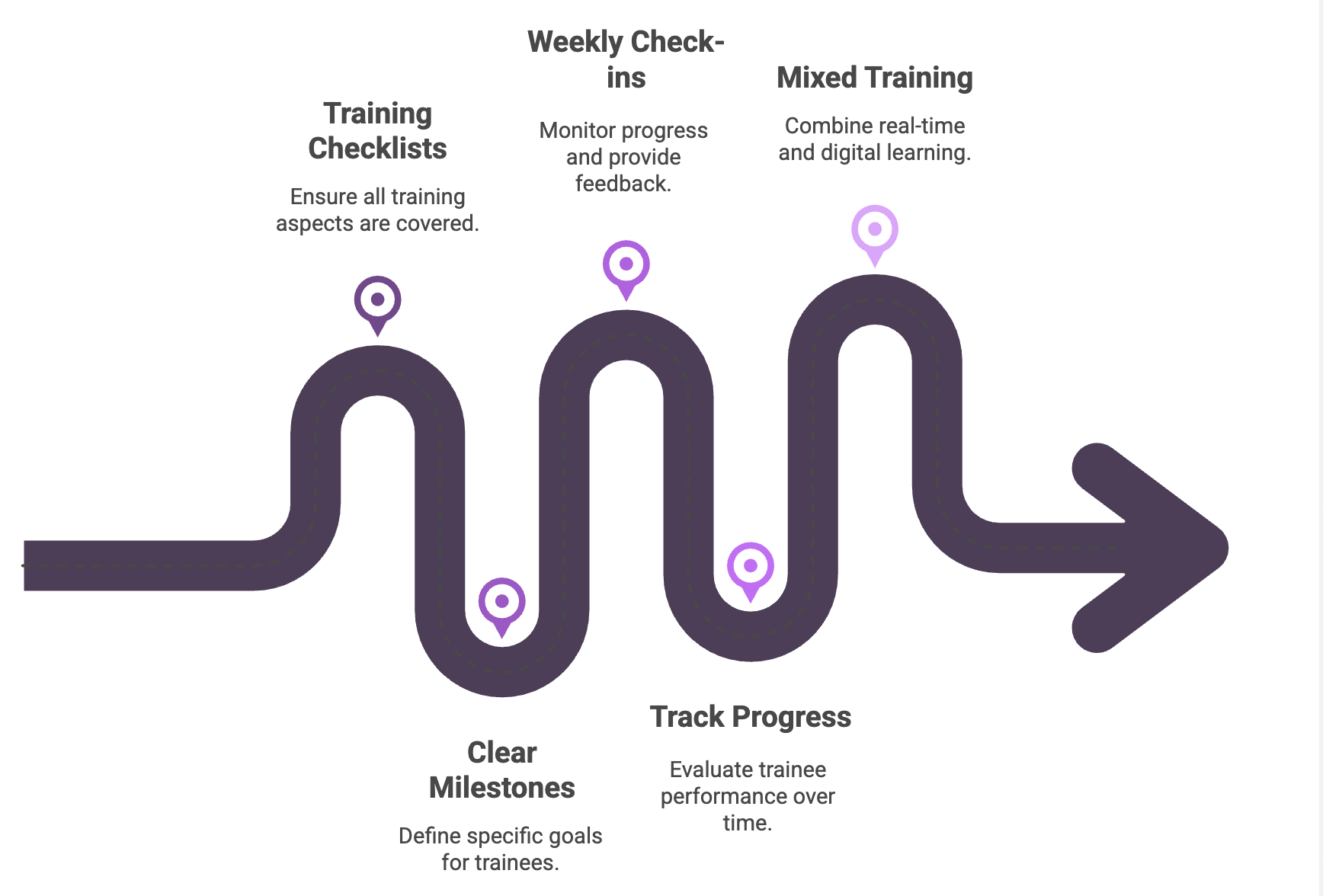
-
Use training checklists
-
Set clear milestones
-
Hold weekly check-ins
-
Track progress
-
Mix real-time training with short written or video modules
This blend ensures consistent learning without losing the human touch.
Documentation Is Still Essential
Even informal training needs tracking. Keep records of:
-
Skills taught
-
Areas of improvement
-
Who mentored whom
-
Readiness for more responsibility
This makes performance reviews, scheduling, and promotions far more objective and fair.
Final Thought: Training That Pays Off Instantly
On-the-job training doesn’t just save time—it builds real-world competence, creates team connection, and helps new hires feel successful from day one. It’s how great restaurant teams are built—one shift at a time.