Back
Back










Gross Margin
Gross margin is your restaurant’s financial heartbeat – it’s the crucial metric that reveals whether your core business model actually makes money before considering all the other expenses that keep your doors open. Understanding and optimizing gross margin can mean the difference between sustainable profitability and slowly bleeding cash until closure.
About Gross Margin
Gross margin is a key metric that shows how much money you make after covering the cost of your food and beverages.
To calculate it:
Gross Margin = ((Total Revenue – Cost of Goods Sold) / Total Revenue) × 100
A Simple Example
If your restaurant makes ₹1,00,000 in a month and your food costs are ₹30,000, your gross margin is 70%. That 70% goes toward paying for labor, rent, utilities, and generating profit.
Gross Margin vs. Net Profit Margin
Gross margin focuses only on direct product costs—like ingredients. Net profit margin, on the other hand, includes all operational expenses.
This difference helps you understand if your core business—turning ingredients into meals—is strong enough to support everything else.
Why Gross Margin Matters
A high gross margin gives you breathing room. It shows you’re pricing your menu correctly and controlling food costs efficiently.
Let’s look at the top ways to optimize it.
Use Menu Engineering to Boost Margins
Promote High-Margin Items
Not all menu items are equal. A burger with 75% gross margin is better for your bottom line than a steak with 45%, even if the steak sells at a higher price.
Successful restaurants spotlight high-margin dishes and rethink or remove low-margin ones.
You must read: How Vibhanshu Mishra Scaled to 200+ Outlets (And How You Can Too!)
Smart Purchasing Pays Off
Build Supplier Relationships
Buying smarter improves your margins without raising menu prices.
-
Negotiate bulk discounts
-
Time your purchases around market price drops
-
Compare supplier rates regularly
Strategic sourcing can sometimes boost margins more than price hikes.
Seasonal Menu Swaps Help
Ingredient prices can spike when they’re out of season. Instead of absorbing those costs, adjust your menu.
Featuring seasonal and locally available ingredients keeps your gross margins stable and your customers happy.
Waste Reduction = Instant Margin Boost
Cutting waste is a direct way to lower your food cost without changing your prices.
Easy Wins for Waste Control
-
Store food properly
-
Train staff on portion sizes
-
Use trim creatively in soups or sauces
Even a 2–5% increase in gross margin from waste reduction can significantly impact profits.
Leverage High-Margin Beverage Sales
Drinks often bring in more margin than food.
-
Wine and cocktails can hit 80–85% gross margin
-
Well-run bars lift total business profitability
If your restaurant has a bar, make sure it’s managed strategically to maximize return.
Monitor Your Gross Margin Regularly
Spot Issues Early
A sudden dip in gross margin? It could mean:
-
Supplier cost increases
-
Portion sizes are off
-
There’s possible theft
Tracking gross margin over time lets you fix issues before they become big problems.
Final Thoughts
Gross margin isn’t just a number—it’s a signal. It tells you if your restaurant’s core engine is healthy.
Focus on:
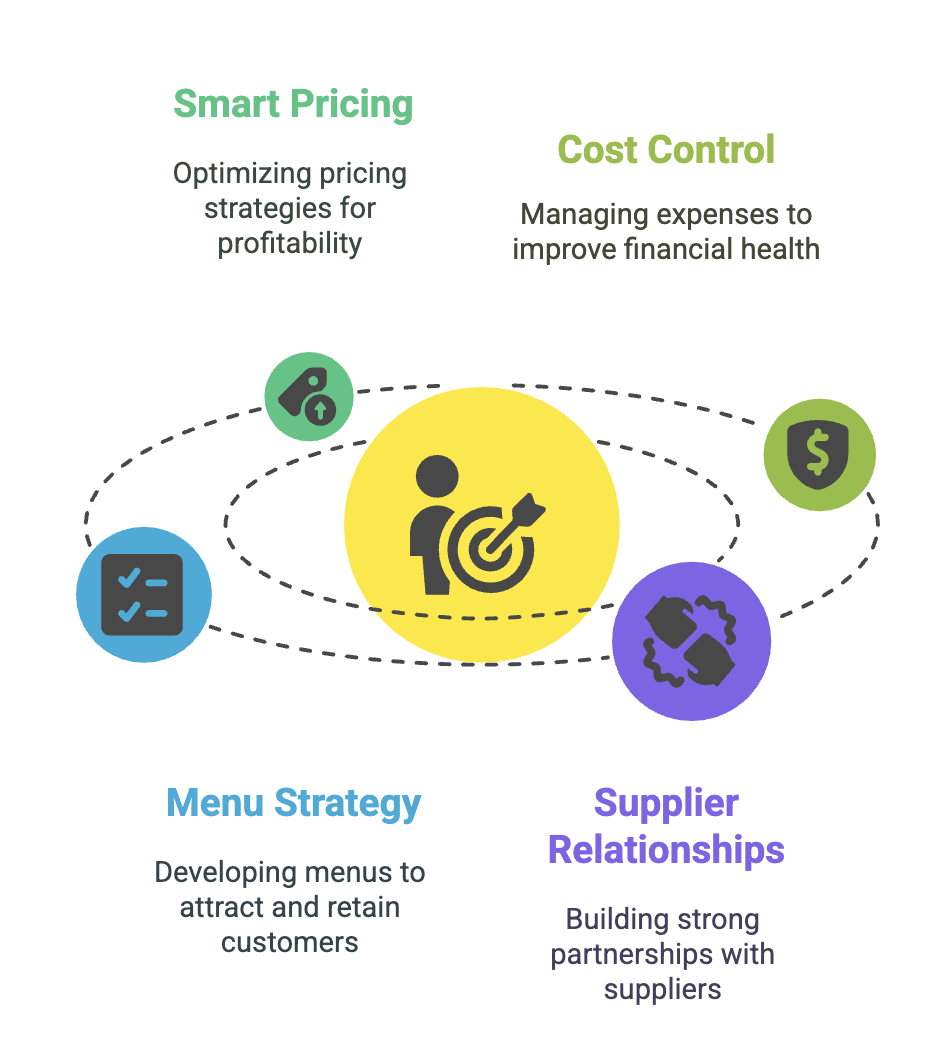
…and you’ll keep that margin strong, your team supported, and your profits growing.