Back
Back










Comps
Ever been surprised by a free dessert after mentioning it’s your birthday? Or had a manager remove an entrée from your bill because it wasn’t prepared to your liking? Welcome to the world of “comps” in the restaurant industry!
What are comps?
“Comps” (short for “complimentary items”) are food or beverage items provided to customers at no charge. They’re essentially freebies that the restaurant deliberately chooses not to collect payment for, despite the cost of ingredients and preparation.
Comps can range from small gestures like a free appetizer to significant adjustments like removing an entire meal from a bill.
Why do restaurants offer comps?
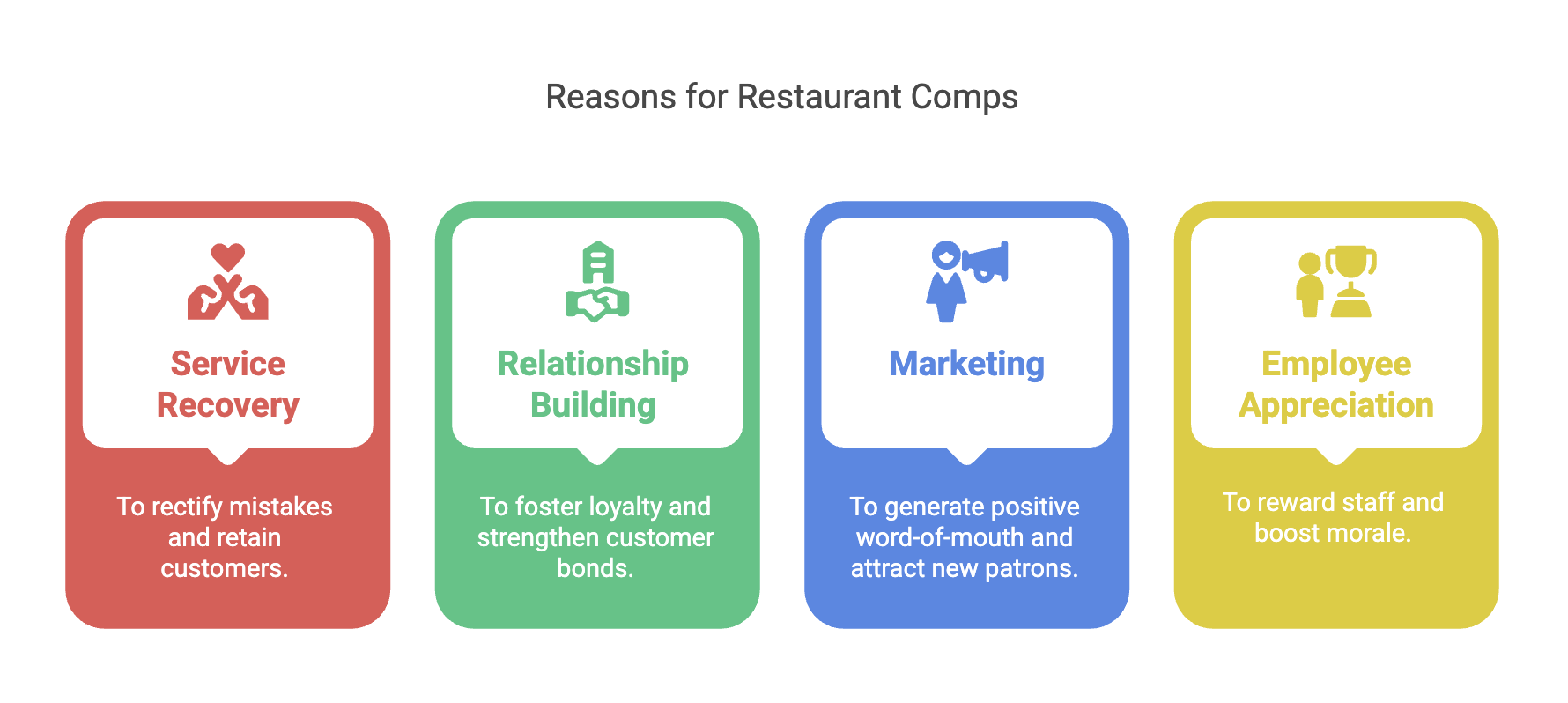
Contrary to what you might think, comps aren’t just random acts of generosity—they serve specific strategic purposes:
Service recovery: When something goes wrong (slow service, cooking errors, etc.), comps help restore customer goodwill. That free dessert after your overcooked steak might turn a negative experience into a positive memory.
Relationship building: Strategic comps for regular customers, influencers, or potential business clients help strengthen valuable relationships.
Marketing: Comping items can generate positive word-of-mouth and social media mentions that drive new business.
Employee appreciation: Many restaurants have policies allowing staff meals at reduced prices or no cost.
Common comp scenarios
You’ll typically see comps used in these situations:
- Food quality issues (meal not prepared correctly)
- Extended wait times (free appetizers while waiting)
- Special occasions (birthday desserts)
- VIP customers (regular patrons, celebrities, influencers)
- Friends and family of staff or owners
- Staff meals (employee food during or after shifts)
You must also read: Smart Scaling for Restaurant by Justin George
Managing comps effectively
While comps can build goodwill, they directly impact profitability. That’s why savvy restaurant managers:
- Track all comps in the POS system with specific reason codes
- Set comp authority limits (servers might be authorized to comp desserts, while managers handle larger adjustments)
- Analyze comp patterns to identify recurring problems (if the chicken dish gets comped frequently, it might indicate a recipe problem)
- Calculate comp percentages (total comps ÷ total sales) to ensure they stay within target ranges
The comp balancing act
A well-managed comp program strikes a balance between generosity and financial responsibility. Too few comps might mean missed opportunities to build customer loyalty; too many could seriously erode profits.
Most restaurants aim to keep their comp percentage under 3% of total sales, though this varies by concept and service style. Fine dining restaurants typically have higher comp percentages than quick-service establishments.
The next time you receive something “on the house,” know that it’s likely part of a careful strategy to earn your long-term business!