Back
Back










 BACK TO BLOG HOME
If you’ve ever wondered what goes on inside the mind of a celebrated chef and restaurateur, you’re in for a treat.
Chef Ajay Chopra, a familiar face from MasterChef India & founder of Zion Hospitality, is not just about great food—he’s got the business smarts to match.
In a candid conversation on Today’s Special on Reelo, he shared some golden nuggets about running restaurants, menu engineering, and why data is the unsung hero of the food industry.
The Zomato & Swiggy effect
Few things have transformed restaurant operations like – third-party aggregator apps. When Chef Ajay started exploring how Zomato and Swiggy were changing the game, he discovered something surprising: preparation speed could make or break a restaurant’s success on these platforms.
“Here’s what most people don’t know,” Chef Ajay explained, “If your order takes less than 9 minutes to prepare, the algorithm favours you. You’ll find yourself at the top of the listings—without spending an extra rupee on advertising.“
This revelation forced him to completely reimagine his menu. The challenge was clear: how do you maintain quality while meeting the demands of quick service? Chef Ajay found himself grappling with tough decisions, particularly when it came to traditional dishes.
“Take biryani, for instance,” he said, shaking his head with a knowing smile. “It’s traditionally a 30-minute cook from scratch, but it remains one of the most ordered items on these platforms. The successful restaurants? They’ve adapted. They keep their biryani ready in pots, making it a simple matter of serving and sending it out.”
He shared the golden rule of modern restaurant management:

It’s a simple principle, that becomes more relevant than ever in the age of digital delivery.
How to talk to Zomato & Swiggy representatives
Many restaurant owners get frustrated when their sales don’t take off despite being listed on Zomato and Swiggy. But Chef Ajay stresses that asking the right questions is key.
“Don’t just call and ask why your sales are low—ask specific questions like ‘What’s stopping my restaurant from ranking higher?’ or ‘Which dishes are performing well in my area?’”
These platforms collect vast amounts of customer data, from ordering habits to peak hours. Instead of fighting the system, smart restaurateurs can work with representatives to gain insights and tailor their strategies accordingly.
Chef Ajay recommends investing in visibility ads in the first few months to gain traction. “If you’re a new restaurant, people won’t find you unless you’re seen. These platforms reward engagement, so you have to play the game right.”
Mastering food costs & Restaurant efficiency
With years of experience managing multiple restaurants, Chef Ajay knows that balancing food costs is key to success. “When I was an executive chef, I managed seven restaurants under me. Each had different food costs—speciality restaurants ran at 34-35%, but banquet catering gave me a buffer at 16-18%.”
One of his biggest hacks? Keeping chefs accountable. “If a chef came to me with a store list worth ₹46,000, my first question was, ‘How much did we sell yesterday?’ If they said ₹1 lakh, I’d say, ‘Then you get a store budget of ₹23,000.’ It’s all about control.”
He also stressed the importance of tracking daily sales, adjusting production based on demand, and training staff to minimize waste. “Many restaurants lose money just because they prep the same quantity every day without checking if it’s needed. A Monday is different from a Friday, and your kitchen must reflect that.”
Why data matters more than ever
For Chef Ajay, the biggest game-changer in the restaurant business has been data. “I used to think success was all about great food. But if you don’t understand data, you’re basically flying blind.”
He shared how restaurant owners often wonder why they aren’t getting enough orders despite spending money on promotions. The answer? Look at your numbers first. “Before you call Zomato or Swiggy to complain, ask yourself—did I set the right sales target? If I aimed for 15 lakhs but made only 5, what went wrong?”
Watch the full episode here:
The power of data in restaurants
Data has become a critical tool in the restaurant business, influencing everything from customer interactions to inventory management. Those who harness it effectively gain a competitive edge.
The human touch in fine dining with data
Data should complement, not overshadow, hospitality. Chef Ajay emphasizes that while insights can guide decisions, the heart of fine dining lies in personal connections.
“For example, when a regular guest celebrates a birthday, having a cake ready creates a memorable moment. But that’s the magic of human interaction—it’s not something data can replace.”
The best restaurants know that customers value personal touches, and they use data as a tool to make guests feel even more special, not as a mere statistic.
Using customer data for targeted marketing
Many restaurants fail to utilize their customer databases effectively. “If you have a list of customers with birthdays in a given month, a simple call or message with a special offer can bring them back.”
Restaurants that take a proactive approach to engaging customers are the ones that build long-term loyalty. (Reelo helps you with exactly that, sign up to know how!)
Launching new dishes based on data insights
Instead of randomly adding new dishes, Chef Ajay suggests using data to guide decisions.
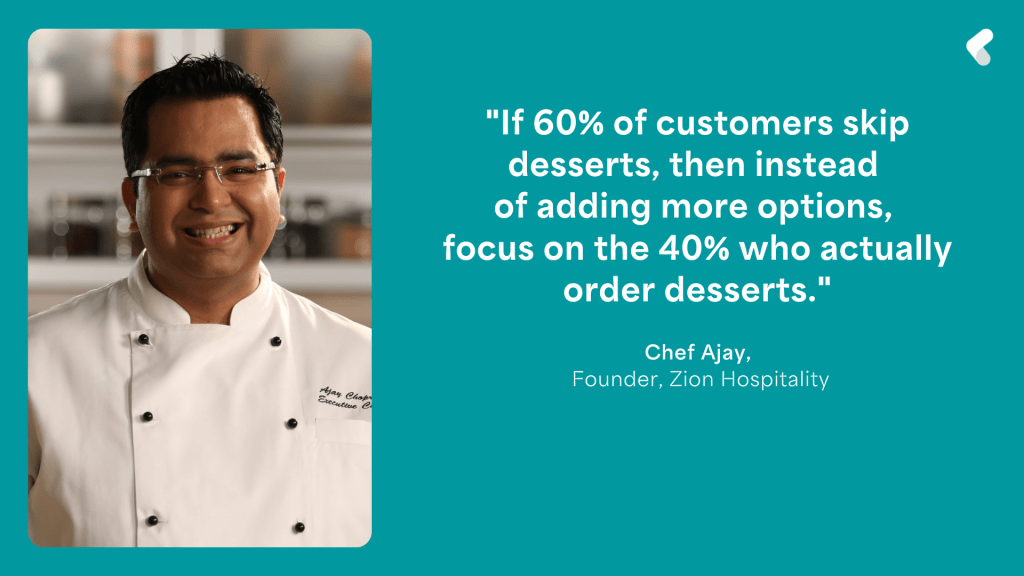
This insight highlights how data can help restaurants avoid unnecessary costs and focus on what actually drives sales.
Importance of data in inventory management
“Keeping track of what sells and what doesn’t helps minimize waste. Restaurants often lose money by over-prepping for slow days like Mondays. Data can prevent that.”
Restaurants that fail to monitor inventory accurately often deal with wastage and unnecessary expenses. Smart inventory management saves money and improves overall efficiency.
Fine Dining vs. QSR: Data usage differences
Fine dining restaurants and Quick Service Restaurants (QSRs) use data in drastically different ways.
“At fine dining places, knowing a guest’s preferred wine or favourite dish can make a big difference. QSRs, on the other hand, focus on order trends and peak sales hours.”
The goal of a fine dining restaurant is to create an experience that makes guests return, while QSRs prioritize speed and efficiency. Understanding this distinction helps restaurant owners choose the right approach for their business model.
For more insights into the latest restaurant trends shaping the industry, check out our free resource—Next Course: Restaurant Trends Report 2025.
The human touch still wins
Despite all the tech and data, Chef Ajay believes that the heart of hospitality is still human connection. He recalled an incident where a customer called him at midnight, furious about a late Zomato order. Instead of brushing it off, he personally called the restaurant, fixed the issue, and even invited the customer over for a free meal the next day. The result? “That guy told at least 15 people about how we handled his complaint.”
Final Takeaway
For restaurants navigating the modern food business, Chef Ajay’s advice is clear: “Understand your customers, make data your best friend, and never lose the personal touch.”
Whether you’re a restaurant owner or just someone who loves food, one thing’s for sure—there’s more to a great dining experience than what’s on your plate!
About The Author